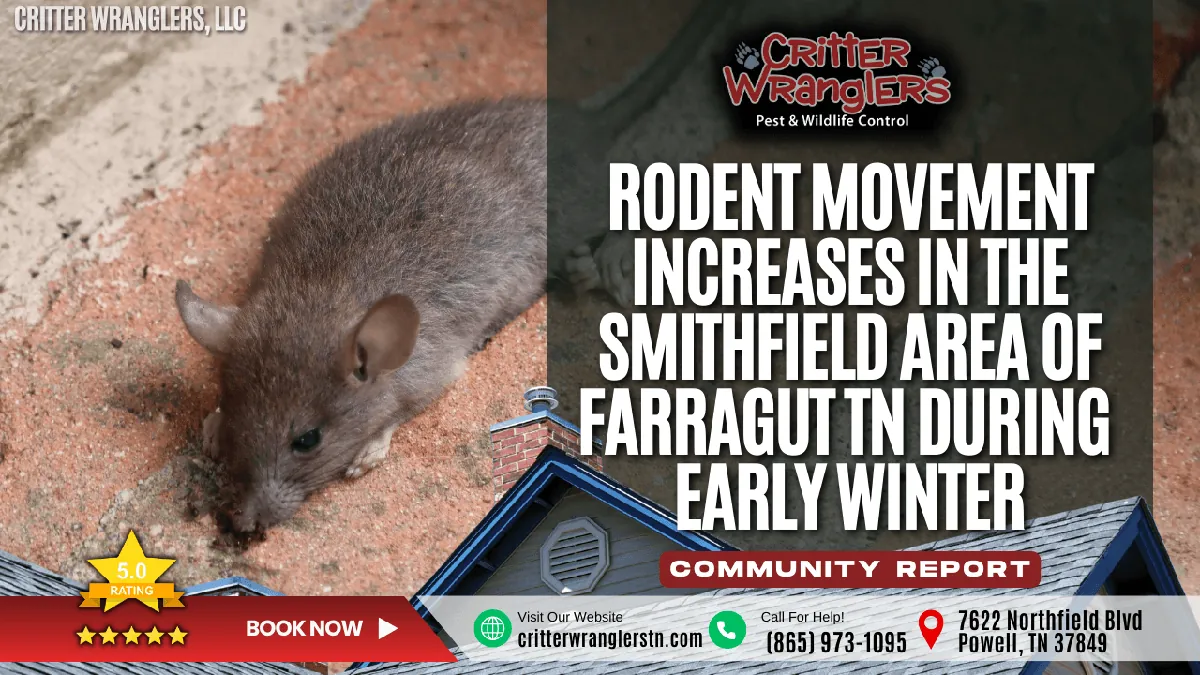
In the Smithfield neighborhood of Farragut, TN, rodent movement rises in early winter as outdoor food sources dwindle and shelter opportunities near homes increase. Warmer microhabitats inside structures attract activity, while proximity to houses lowers travel costs for foragers. Perimeter gaps and vulnerable entry points become common routes for intrusion.
Practical steps include sealing foundations, securing trash, and reducing clutter. Residents can bolster prevention with seasonal sanitation and targeted exterior lighting; more details await further guidance.
Key Article Points
- Food scarcity drives Smithfield rodent activity indoors as outdoor sources dwindle in early winter.
- Declining vegetation and accumulated shelter raise intrusion risk near homes and yards.
- Warmer microhabitats inside structures attract rodents seeking shelter during cold months.
- Entry points, such as gaps around foundations and utilities, enable perimeter movements and nesting.
- Sanitation, sealing, and attractant reduction are essential prevention steps for early-winter activity.
Factors Driving Increased Rodent Activity in Early Winter
Several intertwined factors drive the rise in rodent activity in early winter: food scarcity from dwindling outdoor sources, accumulated shelter opportunities as vegetation dies back, and the accumulation of warmer microhabitats inside human structures. This confluence alters winter behavior by pushing rodents toward proximity to homes and stores, where predictable resources reduce travel costs and exposure. In dry, stored provisions, rodents locate stable calories, while shelter tolerance rises as outdoor cover wanes. Management implications emphasize targeted sanitation, sealing entryways, and minimizing attractants to disrupt routine foraging. Knowledge of seasonal patterns aids proactive monitoring, enabling timely exclusion measures before reproductive peaks. The focus remains on practical prevention, not reactive control, ensuring environments remain inhospitable without reliance on chemicals. Food scarcity thus shapes movement by concentrating activity around available indoor resources. Additionally, ongoing monitoring aligns with the association’s emphasis on quality training and continuing education to keep practitioners informed about seasonal risk factors and best practices. Environmental Health and Safety
Local Environmental Changes and Food Sources
Local environmental changes and shifting food sources shape rodent behavior by altering resource distribution and accessibility. In Farragut’s Smithfield neighborhood, early-winter shifts reduce some outdoor sustenance and concentrate other offerings, prompting selective foraging and movement toward persistent patches. Winter food sources become more seasonal and fragmented, influencing foraging routes and timing.
Residents observe that temporary windbreaks and microhabitats affect shelter availability and ease of access to edible material. Rodents respond by adjusting activity patterns to exploit reliable deposits while minimizing exposure to cold and predators. This dynamic highlights the connection between microclimate, waste management, and landscape structure. Effective monitoring relies on mapping stable food sources and noting shelter availability to anticipate localized activity peaks.
Impact on Homes, Yards, and Brickwork
In Smithfield, winter rodent activity increasingly intersects with homes and yards, as entry points, shelter, and food sources concentrate near human structures. This proximity shapes how Rodent movement manifests on brickwork, foundations, and fascia, where gaps and cracks invite intrusion. Early winter behavior concentrates along perimeters, with gnawing, scent-marking, and nesting evident beneath siding, in crawl spaces, and around utility lines. Yards become staging areas for burrowing, debris relocation, and access routes, elevating risk to doors, windows, and vents. Structural vulnerabilities—loose mortar, uncapped vents, and weathered seals—amplify entry probability. Regular inspections focusing on gaps larger than a dime, sealed conduits, and clean, trimmed vegetation reduce harboring sites, guiding proactive maintenance. Continuous monitoring remains essential as conditions shift. Proactive maintenance and perimeter sanitation also reduce attractants, supporting longer-term rodent control strategies perimeter management and community awareness.
Practical Steps for Residents to Reduce Encounters
Residents can implement targeted, practical measures to cut down rodent encounters.
The following actions prioritize steady, repeatable results and emphasize maintenance over quick fixes.
First, seal entry points around foundations, doors, and utility penetrations using steel wool and hardware cloth; gaps larger than a quarter inch warrant professional screening.
Seal entry points around foundations and doors with steel wool; gaps over ¼ inch require professional screening.
Second, manage food sources by securing trash in lidded containers, removing pet food after meals, and promptly cleaning up spills.
Third, reduce harborages by trimming dense ground cover near structures and eliminating clutter where rodents can nest.
Fourth, store recyclables and compost away from living areas, using closed bins and regular collection.
Finally, install exterior lighting with motion sensors to deter activity.
These two word ideas translate into practical steps for ongoing vigilance.
Community Resources and Prevention Strategies
Community resources and prevention strategies in the Smithfield neighborhood combine organized support with actionable steps for residents. Local public health and code enforcement collaborate with neighborhood associations to disseminate guidance, provide outreach, and coordinate inspections. Winter sanitation programs emphasize routine waste management, secure disposal, and timely trash collection to limit attractants. Housing departments offer checklists for residents and landlords detailing rodent proofing measures, moisture control, and sealing entry points.
Community watch groups report suspicious activity and share preventive best practices through monitored channels. Educational workshops, translated materials, and digital advisories enhance accessibility. Residents are urged to inventory vulnerabilities, implement rodent proofing techniques, and maintain clear exterior perimeters. Enforcement accompanies education to ensure compliance, while feedback loops refine resources for ongoing, proactive prevention.