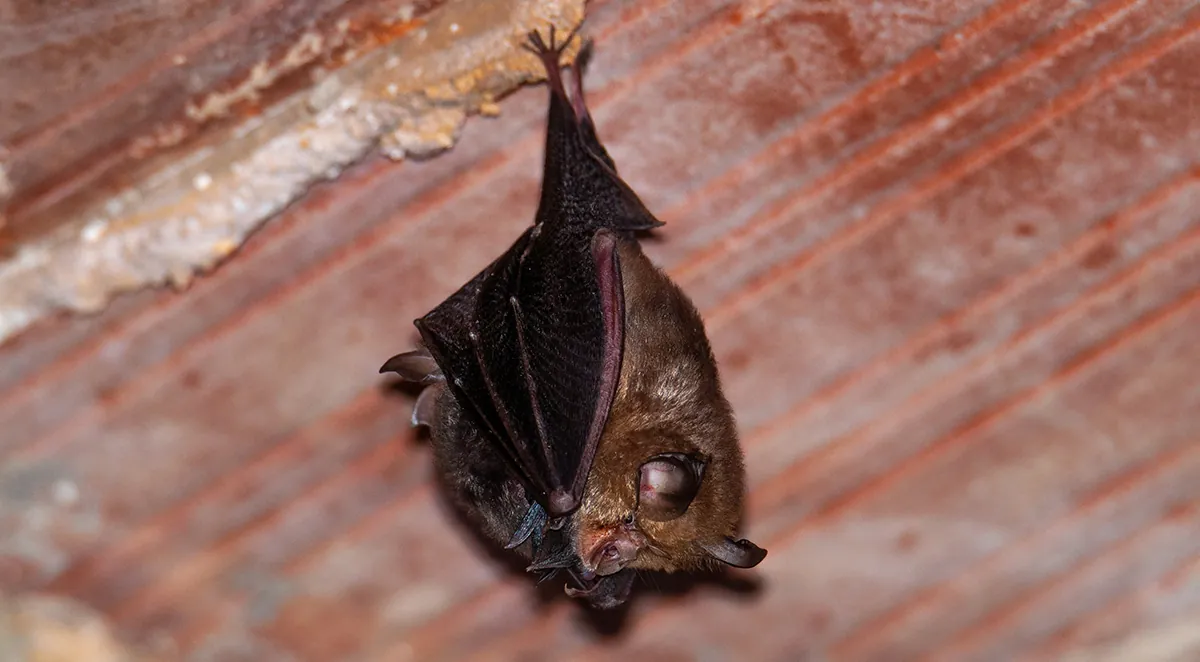
Discovering a bat in your attic can be unsettling, but bats in the home are a more common situation for Knoxville homeowners than most people realize. East Tennessee is prime bat country, and as these animals look for warm, protected roosts, homes frequently fit the bill. If you're dealing with bats in the attic in Knoxville, TN, the most important thing to know up front is that bat removal is not a do-it-yourself job, and for good reason: bats are protected, ecologically valuable, and legally sensitive to handle.
At Critter Wranglers, bat calls are a regular part of our work across Knox County, and we approach them with the care the situation demands. Here's how bats get inside, why they matter, and how professional exclusion actually resolves the problem the right way.
Quick Summary
- East Tennessee is home to several bat species, and they commonly roost in attics, soffits, gable vents and wall voids through small gaps.
- Bats are protected and ecologically important, so they cannot simply be killed or removed by hand.
- The proper solution is professional exclusion using one-way devices that let bats leave but not return, followed by sealing all existing and, ideally, vulnerable entry points.
- Exclusion cannot be done during the summer maternity season, when flightless young would be trapped inside; timing matters and follows wildlife guidance.
- Bat droppings (guano) require careful cleanup, and any potential contact with a bat should be discussed with a medical or health professional.
Why Bats Are Drawn to Knoxville Homes
Bats are looking for the same things any animal wants in a roost: warmth, safety from predators, and shelter from the weather. Attics and wall voids offer all three, staying warm and undisturbed while providing tight, protected spaces that mimic the crevices bats use in nature. In a region as wooded and bat-friendly as East Tennessee, a home near tree cover and insect activity is an appealing target.
Several bat species live in our area, and a few readily use buildings as roost sites. Some form maternity colonies in the summer, where females gather to raise their young, which is exactly why timing becomes so important when addressing a bat problem in a home.
It's worth emphasizing that bats are genuinely beneficial. A single bat can eat huge numbers of insects, including mosquitoes and agricultural pests, in a single night. The goal of dealing with bats in a home is never to harm them; it's to get them out safely and keep them from coming back.
This is also why bat problems tend to grow if they're ignored. A spot that one bat finds comfortable can attract more over time, and a small roost can develop into a larger colony across a season or two. The longer a colony stays, the more droppings accumulate and the more entrenched the animals become, which makes early attention the easier and less costly path.
How Bats Get Inside
Bats are small and can enter through surprisingly tiny openings, often less than a half inch wide. Because they're looking for gaps that lead into warm, hidden spaces, the vulnerable points on a home tend to be, but aren’t always, up high and easy to overlook:
- Gaps where the roofline meets the walls
- Openings around soffits, fascia, and eaves
- Unscreened or damaged attic and gable vents
- Spaces around the chimney and flashing
- Gaps where dormers and rooflines join
- Loose or lifted shingles and ridge caps
Once a bat finds a suitable gap, it can slip in and out to feed while roosting inside during the day. You might first notice the problem from scratching or squeaking sounds overhead at dusk or dawn, staining around an entry point, an unusual odor, or droppings accumulating below a gap.
Why Bat Removal Isn't a DIY Job
It's understandable to want a bat out of your home immediately, but this is one wildlife problem where doing it yourself can cause real harm, legally and practically. Bats are protected wildlife, and it is not permissible to simply kill them or remove them however you please. Handling them directly also carries health risks for both you and the bat that make hands-on removal a poor idea.
There's a timing issue too. During the summer maternity season, colonies include flightless pups that can't leave on their own. Sealing a home during this window would trap the young inside, which is inhumane, creates a serious odor and contamination problem, and can drive desperate bats into your living space. For this reason, exclusion work has to be scheduled around the maternity season in accordance with wildlife guidance. Because these regulations and seasonal timelines can change, it's wise to confirm current rules with the Tennessee Wildlife Resources Agency (TWRA) or a licensed professional who stays current on them.
Finally, one-off removal of a single visible bat rarely addresses the real issue. If bats are roosting in your home, the colony and the open entry points remain, and the problem continues until both are properly resolved.
How Professional Bat Exclusion Works
The humane, effective, and lawful way to resolve a bat problem is a process called exclusion, and it's very different from trapping or extermination. Rather than capturing bats, exclusion lets them leave on their own and simply prevents them from getting back in.
The process begins with a thorough inspection to confirm bats are present, identify the species where possible, locate every entry point, and determine whether it's an appropriate time of year to proceed. Assuming timing is right, one-way exclusion devices are installed at the active entry points. These devices allow bats to exit as they naturally leave to feed but block them from re-entering, so the roost empties out over a few days without anyone handling a single bat.
Once the home is confirmed clear, the entry points and other vulnerable gaps are sealed with durable materials so bats can't return. From there, any droppings and contamination left behind need careful, proper cleanup, since guano shouldn't be disturbed casually. This is where working with a company that handles the full process matters, and our bat removal service covers exclusion and the cleanup and exclusion repair that follow, all under one roof.
Because we're trained and certified in wildlife control standards, including bat-specific standards, we handle these jobs the right way from start to finish, protecting your home while respecting the animals and the rules that govern them.
The cleanup step deserves a little extra attention, because it's easy to overlook once the bats are gone. Guano can accumulate over time in an active roost, and disturbing it improperly can release particles you don't want circulating in your home. Proper cleanup, removal of soiled materials, application of deodorizer and restoration of any soiled insulation round out the job and leave the space genuinely restored, not just emptied.
Frequently Asked Questions
Is it legal to remove bats from my house myself?
Bats are protected, so you cannot simply kill them or remove them however you like, and there are seasonal restrictions on when exclusion can be done. The safe and lawful route is professional exclusion. Because rules can change, it's best to confirm current guidance with the TWRA or a licensed professional.
Why can't bats be removed in the summer?
Summer is the maternity season, when colonies include flightless young that can't leave on their own. Sealing the home then would trap the pups inside, which is inhumane and creates serious contamination and odor problems. Exclusion is timed around this season accordingly.
How do professionals get bats out without harming them?
Through exclusion, using one-way devices installed at entry points that let bats fly out to feed but prevent them from getting back in. The roost empties on its own over a few days, and then the openings are sealed so bats can't return. No bats are handled or harmed.
Are bats in my attic dangerous?
Bats are beneficial insect-eaters and aren't aggressive, but their droppings require careful cleanup and any potential direct contact with a bat should be taken seriously. If you or a pet may have had contact with a bat, contact a medical or health professional promptly.
How do I know if I have bats and not another animal?
Bats are often heard as scratching or squeaking around dusk and dawn, and you may notice staining around an entry point, an unusual odor, or droppings accumulating below a gap. A professional inspection can confirm whether bats are present and locate the entry points.
Handle a Bat Problem the Right Way
Bats are valuable, protected animals, and getting them out of your home safely takes the right process at the right time of year. Exclusion, done properly, resolves the problem humanely and permanently: the bats leave on their own, the gaps get sealed, and the mess gets cleaned up correctly.
If you suspect bats in your attic, the best step is to have a professional take a look rather than trying to handle it yourself. Critter Wranglers is here to help. Request your free quote or contact us to schedule an inspection. We're locally owned, certified in wildlife standards, and just a call away at (865) 973-1095.