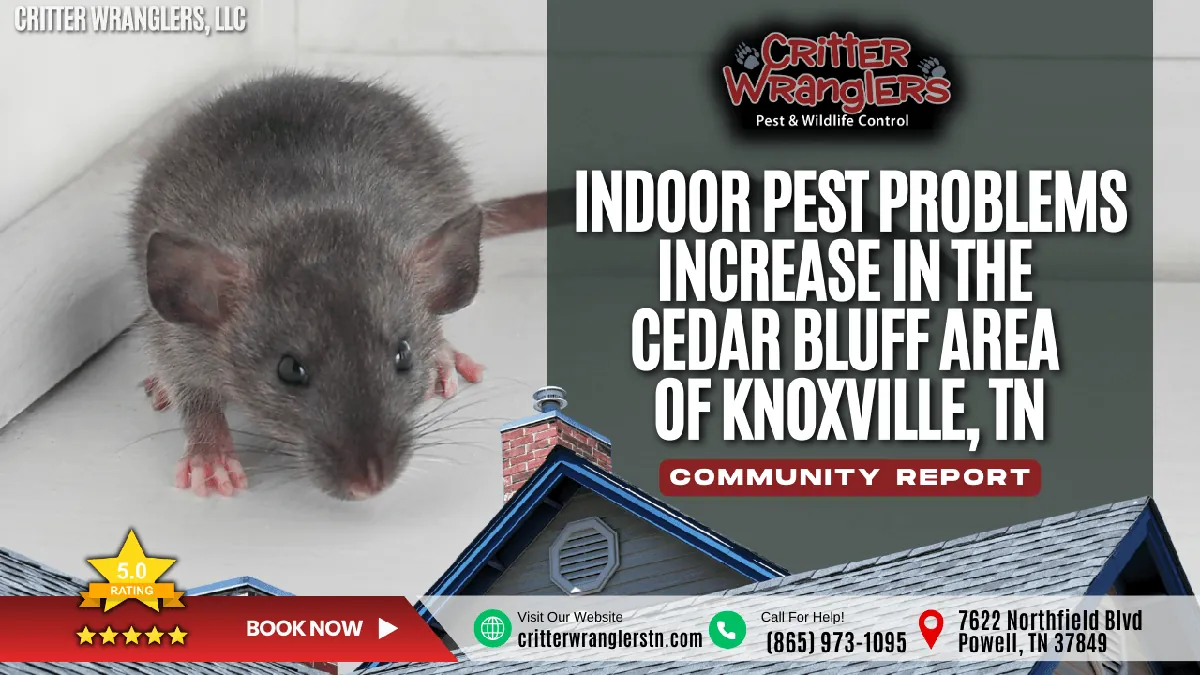
After wet and cold spells, pests move indoors in Cedar Bluff, Knoxville, as exterior conditions become harsher. Pests seek shelter near structures, drawn by moisture, damp debris, and food sources. Common intruders include ants, spiders, beetles, and cockroaches entering through gaps around windows, doors, and utility openings.
Moisture control and regular cleaning reduce attractants. Seal entry points, maintain screens, and manage crawlspace humidity to limit refuges. Persistent issues may require professional help; further details follow.
Key Article Points
- Wet, cold spells push pests indoors as exterior conditions worsen and outdoor shelter becomes scarce near Cedar Bluff homes.
- Entry points around windows, doors, foundations, and utility penetrations attract ants, spiders, and beetles post-cool spells.
- Increased indoor humidity and damp crevices in basements or crawl spaces sustain moisture-loving insects like cockroaches and silverfish.
- Proactive sealing, vent screening, and moisture control reduce indoor refuge and subsequent pest activity after wet weather.
- Regular cleaning and inspections help detect moisture sources and gaps early, preventing recurring intrusions in Knoxville’s Cedar Bluff area.
Why Wet and Cold Weather Push Pests Indoors
As temperatures drop and precipitation increases, pests seek shelter indoors to escape the harsher exterior conditions. The pattern follows a predictable sequence: reduced outdoor forage, increased confinement, and altered microclimates near structures. In this context, storm preparedness becomes a central consideration, guiding homeowner choices about barriers, sanitation, and monitoring. Garden pest interactions shift as organisms move along edges and entry points, exploiting gaps in siding, windows, and foundations. Indoor refuge often persists despite external weather changes, elevating the importance of proactive sealing and vent management. Understanding these dynamics supports effective integrated pest management, emphasizing prevention over reactive measures. Clear assessment of entry routes, routine maintenance, and timely exclusion strategies contribute to resilient household spaces during extended wet, cold spells. Pesticide Management Add a focused effort on monthly training and staying informed through professional associations to support informed decisions and up-to-date practices. ETPCA
Common Intruders in Cedar Bluff Homes After Cool Spells
Common insects commonly enter Cedar Bluff homes after cool spells, including household pests such as ants, spiders, and beetles, which may seek shelter indoors. The piece should note likely seasonal entry points like gaps around windows, utility openings, and door thresholds, as well as common indoor pathways from basements and crawl spaces. Practical steps for prevention include sealing gaps, maintaining screens, and prioritizing routine inspection to reduce intrusions.
Ants, spiders, and beetles often exploit small openings created by weathered seals and unsealed utility entries, making regular maintenance essential. Identify Common Pests can help homeowners recognize which intruders are most likely to appear after cool spells and tailor prevention accordingly.
Common Insects Indoors
Common household pests commonly enter Cedar Bluff homes after cool spells, drawing indoors in search of shelter and warmth. This section catalogs prevalent indoor insects observed after cold periods, emphasizing behavior, rustling signs, and typical habitats. Cockroaches, especially German and American species, exploit kitchens, plumbing gaps, and cluttered spaces, while ants form trails from exterior foraging sites into walls and cupboards. Pantry pests, including beetles and moths, exploit stored goods, necessitating inspection of packaging and dry goods areas. Spiders, though beneficial, inhabit corners and basements, often arising from nearby vegetation. Silverfish prefer humid environments, aligning with indoor humidity fluctuations. General preventive measures focus on sealing entry paths and maintaining clean storage zones. In some cases, bat proofing considerations reduce roosting pressures near attics, indirectly limiting insect access.
Seasonal Entry Points
Seasonal shifts after cool spells expose a pattern of entry points that enable common intruders to access Cedar Bluff homes. In winter-stressed structures, attention centers on gaps, cracks, and openings that emerge or widen with temperature fluctuation. The concept of seasonal entry points highlights how small defects become conduits for pests seeking warmth and shelter. Moisture as a magnet often accompanies these access routes, drawing insects and arthropods to damp crevices and foundations.
- Exterior gaps around doors and windows
- Cracks in siding, soffits, and foundation
- utility penetrations and unsecured crawlspace openings
This framework supports targeted inspection by homeowners and professionals, focusing on moisture-prone zones and vulnerable seams. Awareness of seasonal entry points informs diagnostic assessments and guides durable repairs without overreliance on temporary fixes.
Prevention Tips Now
As cool spells settle in Cedar Bluff, homeowners should anticipate which intruders are likely to seek shelter indoors and adopt targeted prevention steps. The focus is on common intruders after cool spells, emphasizing pest proofing basics and indoor humidity control as core strategies.
Prevention tips now center on entry-point sealing, proper storage, and monitoring of interior moisture levels. Early inspection targets gaps around doors, windows, soffits, and utility penetrations. Routine vacuuming and clutter reduction minimize harborage. Maintain indoor humidity at levels unfavorable to pests, using dehumidifiers where needed and addressing condensation hotspots.
| Prevention Action | Expected Benefit |
|---|---|
| Seal entry points | Reduces intrusion opportunities |
| Manage humidity | Deters moisture-loving pests |
| Store goods properly | Limits attractants and nesting sites |
These steps support sustained pest proofing basics and informed humidity control.
Moisture as a Magnet: The Attractant Behind Indoor Pests
Moisture acts as a key attractant for indoor pests, drawing insects and other organisms into homes where dampness exists. In Cedar Bluff, sustained moisture creates a favorable microclimate that enables pests to thrive, even when exterior conditions are unfavorable. Controlling moisture reduces the resources pests use for shelter and reproduction, thereby lowering infestation risk. The relationship between moisture triggers and indoor humidity explains why seemingly minor dampness can sustain persistent populations.
Moisture draws pests indoors; reducing humidity weakens their shelter and reproduction.
- Monitor and reduce indoor humidity to disrupt breeding cycles.
- Eliminate recurring condensation and leaks at their source.
- Maintain a dry, well-ventilated environment to limit attractants.
Entry Points: How Pests Access Your Home
Pests commonly enter homes through structural weaknesses such as cracks and gaps, as well as through doors and windows that don’t seal properly. Vents and utilities can provide additional access points when openings are not weatherproofed or screened. Identifying these entry points is essential for targeted prevention and effective sealing.
Cracks and Gaps
Cracks and gaps around a home provide ready access for a range of pests. Small openings can permit entry for ants, spiders, rodents, and invading insects seeking shelter after wet, cold weather. The integrity of exterior surfaces influences intrusion risk, making proactive sealing essential. Professionals emphasize targeted crack sealing and gap filling as preventive measures to reduce moisture intrusion and nesting sites.
- Assess exterior foundations, siding joints, and utility penetrations for deflection or deterioration.
- Apply appropriate crack sealing compounds and gap fillers that resist moisture and temperature cycling.
- Validate repairs with ongoing inspections after weather events, ensuring openings remain sealed.
Effective crack sealing and gap filling support long-term pest deterrence, contributing to interior comfort and structural protection.
Doors and Windows
Doors and windows serve as common entry points for pests, especially after prolonged wet and cold conditions that encourage shelter-seeking behavior. In Cedar Bluff, homeowners frequently encounter intrusions near thresholds, sills, and frame joints where weather stripping deteriorates. The assessment emphasizes that any gap larger than a few millimeters can permit small insects and, in some cases, larger rodents.
Maintenance tasks include inspecting seals, replacing worn weatherstripping, and ensuring tight, well-fitted door sweeps. While addressing these entry points, practitioners avoid implying that blocked topic or irrelevant idea influence pest behavior; instead, they emphasize structural integrity and routine inspections. Integrated strategies combine targeted caulking, door adjustments, and window hardware checks to minimize access and reduce subsequent infestations after harsh weather.
Vents and Utilities
Vents and utilities provide direct routes for pests to enter a home, especially when exterior openings are damper or damaged during wet, cold spells. They exploit gaps around vents, ducts, and utility penetrations, underscoring the importance of enclosure integrity and maintenance. Proper sealing, screening, and insulation reduce intrusion opportunities and support ventilation efficiency by minimizing leaks. Electrical insulation, when compromised, can create small openings that pests exploit to access interiors. Monitoring and regular inspection identify vulnerabilities before significant infestations arise.
- Inspect all exterior vent terminations and sealants for gaps.
- Install and maintain fine-mesh screens on intake vents and exhausts.
- Ensure utility penetrations are properly sealed with appropriate materials and rated sealants.
The Role of Outdoor Conditions in Pest Activity
Outdoor conditions strongly influence pest activity, with temperature, humidity, and precipitation shaping when and where pests are active. In Cedar Bluff, fluctuations in outdoor humidity affect pest survival and reproduction, particularly for arthropods sensitive to moisture levels. Prolonged wet spells can sustain sheltering sites, while drought periods may drive insects to seek internal moisture sources near structures.
Temperature governs developmental rates, with warm periods accelerating life cycles and cold snaps suppressing activity. Precipitation alters habitat availability, creating standing water and damp debris that serve as food and harbor for larvae and adults. Roof drainage plays a critical role by preventing water intrusion and mold-prone zones that attract pests. Proper drainage reduces humidity pockets that invite intrusion and contributes to overall indoor pest resistance.
Seasonal Shifts: When Pests Become a Nuisance
Seasonal shifts often transform calm neighborhoods into pest-prone environments as weather patterns change and shelter becomes scarce or plentiful. As temperatures modulate, pest activity follows a measurable cadence, influencing indoor air quality and perceived discomfort. Professionals note that perception ties closely to pest psychology, where rising nuisance reports reflect both population movement and human sensitivity to unfamiliar intrusions. The result is a predictable spike in complaints during transition periods, even when overall pest pressure remains moderate.
- Temperature-driven migrations alter indoor exposure and encounter rates.
- Relative humidity fluctuations affect arthropod behavior and allergen release.
- Daylength changes correlate with activity cycles and human awareness.
This pattern underscores the need for monitoring cross-seasonal risks and understanding how shifting conditions reshape nuisance thresholds.
Practical Cleaning and Maintenance to Reduce Attractants
Effective cleaning and maintenance routines directly address the attractants that pests use to invade indoor spaces, building on observations from seasonal nuisance patterns. The approach emphasizes disciplined, repeatable actions that minimize resources pests rely on. Regular surface cleaning eliminates food residues and reduces odor trails that entice intruders. Implementing a structured seasonal meal prep routine lowers the availability of stored scraps and crumbs, limiting secondary attractants. Clutter reduction plays a crucial role by removing concealment and harborage; clearer spaces expose pests sooner, enabling timely intervention. Routine vacuuming, damp-musting, and prompt disposal of waste curb indoor breeding sites. Maintenance includes sealing gaps, checking weatherstripping, and repairing leaks to deter moisture-loving species. Consistency ensures a predictable environment less hospitable to infestations.
Storage and Food Handling Tips to Deter Infestations
Proper storage and careful food handling reduce common indoor attractants by limiting accessible food sources and odor cues. In practice, adherence to storage basics minimizes pest appeal and preserves product quality. Attention to routine procedures supports a controlled environment and diminishes infestation risk.
- Store dry goods in airtight containers, off the floor, and labeled for rotation.
- Keep perishables refrigerated or frozen promptly, preventing odor diffusion.
- Maintain clean shelves and trash areas, promptly disposing of scraps and compost.
This approach emphasizes disciplined food handling and consistent sanitation. By integrating these steps, households reduce attractants without relying on reactive measures. The goal is sustainable containment through precise practices, not temporary mitigation. Storage basics and meticulous handling form a foundation for ongoing pest resistance, aligning with broader integrated prevention strategies and supporting long-term household resilience.
When to Call Pest Control Professionals
Pest control professionals should be contacted when infestations exceed basic at-home measures or when signs indicate a recurring problem.
Indicators include persistent sightings, unusual increase in pest activity, or damage that warrants specialized treatment.
Timely professional assessment helps identify species, assess health risks, and determine appropriate intervention.
When to Seek Help
When should residents seek professional pest control assistance in response to a pest problem? Informed decisions rely on timing, severity, and property impact. Residents should consider professional help when initial prevention efforts fail, infestations persist beyond a reasonable testing window, or safety concerns arise from chemical exposure or structural damage. A measured approach protects interiors and reduces recurring problems, aligning with an unrelated topic and a random idea to illustrate decision factors without distraction.
- Assess persistence after basic sanitation and exclusion attempts
- Evaluate potential health risks or property damage warranting expert intervention
- Schedule a professional inspection when signs reoccur or escalate
The objective is timely, targeted action. Equipment, methods, and timelines vary by species and setting.
Signs to Contact Pros
Signs that warrant contacting pest control professionals emerge clearly when issues persist despite basic measures or involve risks to health, safety, or structure. In such cases, a professional assessment helps verify species, identify nesting sites, and prevent rapid proliferation. When indoor problems persist after routine cleaning, sealing, and moisture control, escalation is warranted. Indicators include recurring infestations in multiple rooms, unusual odors, or symptoms of mold and structural dampness linked to pest activity. Outdoor lighting and lawn maintenance practices can influence pest behavior; mismanaged outdoor lighting may attract nocturnal insects, while improper lawn mowing can create favorable harborage. Early intervention minimizes chemical exposure, preserves indoor air quality, and reduces repair costs through targeted, integrated pest management strategies.
Long-Term Prevention for a Pest-Free Home
Effective long-term prevention combines proactive monitoring, structural maintenance, and integrated pest management practices to keep homes pest-free. Sustained efforts reduce recurring infestations by addressing environment and access points. Key focus areas include controlling indoor humidity and ensuring crawlspace vents remain unobstructed to prevent moisture buildup.
- Implement routine inspections to identify moisture sources and entry points before pests establish.
- Maintain seals, weatherstripping, and vents; repair structural gaps and reinforce crawlspace hygiene to deter colonization.
- Integrate preventive treatments with landscape management, filtration improvements, and sanitation practices to minimize attractants.
Ongoing education and documentation support mastery, enabling homeowners to anticipate seasonal risks. The emphasis on indoor humidity control and crawlspace vent maintenance aligns with best practices for durable pest resistance, reducing the need for reactive interventions and promoting a consistently healthy indoor environment.