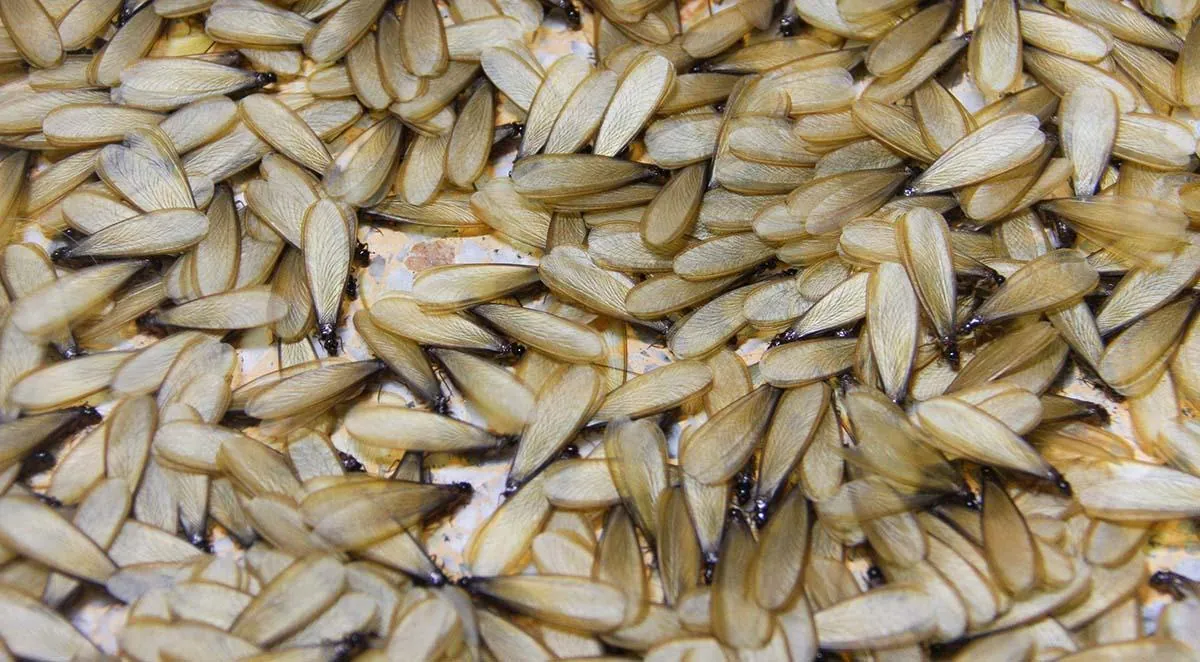
It's a warm afternoon in early April. You walk past a window and notice a cluster of small winged insects gathered near the sill. Or you find a dusting of discarded wings on the floor by a sliding door. Maybe you see them near a light fixture at dusk. It's easy to dismiss the moment; maybe it's just ants, maybe it's nothing. But in East Tennessee, spring is termite swarm season, and that cluster of wings is worth paying attention to.
Seeing swarmers doesn't always mean your home is under immediate structural threat. But it does mean a termite colony is active somewhere nearby, and depending on where you see them, it may mean that colony is already inside your home. Every homeowner in Knox County and the surrounding area should know what swarm season looks like, what it means, and what to do about it.
Quick Summary:
- Termite swarm season in Tennessee runs roughly March through May, peaking after warm spring rains
- Swarmers (winged reproductive termites) are the most visible sign of an established colony
- Finding wings or live swarmers indoors is a strong indicator of an active infestation in your structure
- Flying termites and flying ants look similar but behave differently. Knowing the difference matters
- Spraying consumer pesticide products on swarmers won't address the underlying colony
- A professional inspection is the right response to any indoor swarm event
What Is Termite Swarm Season?
Termite swarm season is the period each year when reproductive termites, called alates or swarmers, leave an established colony in large numbers to mate and found new colonies. In Tennessee, this typically occurs from late February through May, with peak activity in March and April. Swarming is triggered by warm temperatures, high humidity, and often follows a rain event; conditions that East Tennessee's spring delivers reliably every year.
It's important to understand what swarmers actually are. They're not workers. They don't chew wood. They're the reproductive members of a mature termite colony, and their emergence signals something meaningful: the colony they came from has been active long enough — typically three to five years — to produce a reproductive caste. The swarm itself isn't destroying your home. The colony behind it may be.
After emerging, swarmers fly briefly, shed their wings, pair off, and attempt to establish new colonies in the soil. Most don't survive. The ones that do are the founders of next year's problem.
Why East Tennessee Has a Serious Termite Problem
East Tennessee's climate and soil profile create conditions that subterranean termites are well-adapted to exploit. Several factors combine to make Knox, Blount, Anderson, Loudon and Union counties consistently active termite territory:
- Clay-heavy soils hold moisture longer than sandier profiles, keeping the ground conditions termites favor active even between rain events
- Mild winters don't provide the sustained freezing temperatures that slow colony activity in colder climates. Termites in Tennessee are essentially active year-round at the soil level
- High humidity through spring and summer sustains the moisture conditions termites need both in soil and in wood
- Older home stock throughout the Knoxville area means more crawl space foundations with wood-to-soil contact, more moisture history, and more opportunity for colonies to establish undetected
If you've lived in East Tennessee for any length of time, you've likely heard stories from neighbors about termite damage that went undetected for years. Those stories reflect the real risk profile of this region.
Flying Termites vs. Flying Ants: How to Tell the Difference
The most common question homeowners ask during swarm season is whether what they're seeing is termites or ants. Both species swarm, both have wings, and both can appear in large numbers. The answer matters because the response is different. Here's how to tell them apart:
|
Feature |
Termite Swarmers |
Flying Ants |
|
Body shape |
Uniform width, no pinched waist |
Distinctly pinched waist between thorax and abdomen |
|
Wings |
Two pairs of equal length; both pairs extend past the body |
Two pairs of unequal length; front wings longer than rear |
|
Antennae |
Straight or slightly curved |
Distinctly elbowed, bent at a sharp angle |
|
Wing texture |
Soft, pale, easily shed |
More opaque, veiny, attached more firmly |
|
Color |
Usually pale brown or cream |
Variable, often darker |
If you're not sure what you're looking at, collect a sample in a sealed bag or container and we can identify it during an inspection. Don't assume either way — the correct identification changes the recommended response.
Signs You're Dealing with a Termite Swarm
Beyond seeing live swarmers, there are several signs that indicate termite swarm activity on or near your property:
- Discarded wings on windowsills, door frames, or floors; swarmers shed their wings almost immediately after landing, so finding wings without seeing live insects is still a swarm sign
- Clusters of winged insects near light sources, windows, or exterior doors, especially in the evening
- Mud tubes running along foundation walls, crawl space piers, or exposed concrete — these are the travel tunnels subterranean termites build to move between soil and wood
- Hollow-sounding wood in flooring, door frames, or trim — tap suspected areas and listen for a papery, empty sound
- Soft spots or sagging in wood flooring near exterior walls or crawl space access points
- Paint bubbling or uneven surfaces on wood near the ground level, which can indicate moisture damage from termite activity
The presence of any one of these signs warrants a professional inspection. Finding multiple signs together is a strong indication of an active colony.
What to Do If You See Swarming Termites
If you witness a termite swarm in or near your home, here's the right sequence of steps:
- Don't panic, but don't dismiss it. A swarm is meaningful information. Take it seriously without assuming the worst.
- Don't spray consumer pesticide products on the swarmers. This won't address the colony doing the actual damage, and it can contaminate the area in ways that interfere with professional treatment.
- Collect a sample if possible. Place a few swarmers or discarded wings in a sealed bag or container. This helps with identification and confirms what species you're dealing with.
- Note the location carefully. Where you see swarmers matters significantly. Indoor swarmers and outdoor swarmers mean different things.
- Call a licensed pest control professional for an inspection. This is the only way to know the extent of the problem and what treatment is needed.
The indoor versus outdoor distinction deserves extra attention. If swarmers appear outside your home, near the foundation or in your yard, it may mean a colony exists in the soil nearby but hasn't yet entered your structure. That's an early warning worth acting on. If swarmers appear indoors – near interior walls, in living spaces, or emerging from floor cracks – the colony is almost certainly already inside your home.
The Difference Between Swarmers and an Active Infestation
This is the point most homeowners find confusing, and it's worth being clear about. Swarmers are the visible symptom. The damage is being done by workers that you'll almost never see.
Subterranean termite workers live in the soil and move through mud tubes into the wood of your structure. They consume wood from the inside out, following the grain in ways that leave surfaces intact while hollowing out the interior. By the time a swarm event occurs, the worker colony has typically been active for three to five years. The structural damage is already accumulating.
This is why the swarm is a meaningful event: not because the swarmers themselves are dangerous, but because they confirm that an established colony is present. Acting on the swarm is acting before the damage compounds further.
It's also worth noting that swarmers can occasionally emerge from a neighboring structure or a colony in a nearby tree or wood pile. An outdoor swarm near your home doesn't automatically mean your structure is infested. But it does mean a professional inspection is warranted to determine whether the colony has found its way into your foundation.
What a Professional Termite Inspection Covers
A thorough termite inspection goes beyond a quick visual scan of accessible areas. When our technicians inspect a property for termite activity, we're examining:
- Crawl space foundations for mud tubes, damaged wood, and moisture conditions that sustain colonies
- Foundation perimeter for evidence of termite entry points, soil-to-wood contact, and mud tube construction
- Exposed structural wood for hollow sections, damaged grain, and active termite presence
- Moisture conditions throughout the structure, since persistent moisture is both a termite attractant and an early warning sign
- Adjacent conditions including mulch beds, wood debris near the foundation, and landscape features that create termite harborage
If active termite presence or damage is found, we'll walk you through what we've found and what treatment looks like before any work begins.
For treatment, we use Termidor, one of the most proven and effective termite treatment products available. Termidor works through a transfer effect: it's non-repellent, meaning termites don't detect or avoid it. They contact treated soil and carry the active ingredient back to the colony through normal social behavior, which eliminates populations at the source rather than just deterring individual insects from specific areas.
Frequently Asked Questions
When is termite swarm season in Tennessee?
In East Tennessee, termite swarm season typically runs from late February through May, with peak activity in March and April. Swarming is triggered by warming temperatures and moisture, so the first warm rainy stretch of spring is when you're most likely to see activity. Warmer-than-average winters can push the season earlier, and late cold snaps can delay it.
Does seeing flying termites mean my home is infested?
It depends on where you see them. Finding swarmers outdoors near your foundation means a colony is active nearby and warrants an inspection to determine whether your structure is involved. Finding swarmers indoors — emerging from walls, floors, or interior spaces — is a strong indicator that the colony is already inside your home. In either case, the right response is a professional inspection.
How long does termite swarm season last?
Individual swarm events are typically brief, lasting a few hours to a day. The broader swarm season in Tennessee runs from late winter through late spring, roughly late February through May. During that window, swarms can occur multiple times on warm, humid days following rain events. A single property may experience more than one swarm event in a season.
What's the difference between a termite swarm and a termite infestation?
A swarm is a specific reproductive event: winged termites leave an established colony to mate and found new colonies. An infestation is the ongoing presence of an established colony actively consuming wood in or near your structure. The two are related but distinct. A swarm signals that an established colony is present somewhere nearby. An infestation means that colony is already in your structure and workers are actively causing damage.
How much damage can termites cause before they're detected?
Significant damage. Subterranean termite colonies typically exist for three to five years before producing the reproductive alates that cause a visible swarm. During that time, workers consume wood from the inside out in ways that leave surface structures intact. By the time swarmers appear (or visible damage becomes apparent) the colony may have already compromised structural members, floor joists, or crawl space framing. This is the primary reason proactive annual inspection is a sound investment rather than a reactive one.
Should I wait to call an exterminator until after swarm season?
No. Swarm season is the right time to act, not a reason to wait. The swarm you're seeing is the visible confirmation of a colony that's been active for years. Waiting until swarm season ends doesn't reduce the damage accumulating in the meantime. A spring inspection is the most timely response to a spring swarm event.
Conclusion
Termite swarm season in East Tennessee arrives reliably every spring, and the homeowners who come through it best are the ones who know what they're looking at and act while the season is still active. A swarm doesn't automatically mean catastrophic damage — but it does mean a colony is established and active, and the right response is an inspection, not a wait-and-see approach.
If you've seen swarmers this spring, or if it's been more than a year since your last professional termite inspection, now is the time to schedule one. Our inspections are free, our technicians know what to look for, and we'll give you a straightforward assessment of what we find before recommending any treatment.
Schedule your free termite inspection today or learn more about our termite control services. If you're ready to talk right now, call us at (865) 973-1095.